


Find Yellow Leaf on:
From the moment we discovered these hammocks, we fell in love. Not just with their cushy embrace or their beautiful colors, but with their impact. Right off the bat, one of the most amazing things we saw was that their creation had a positive impact on every level of society - people, planet and prospects for the future.
When we decided to take Yellow Leaf global, we made a commitment to embrace this multi-tiered impact as the foundation of our business plan and hold the Four Pillars of Sustainability as the guiding principles for every business decision we make.
With the support of our customers, advisers and partners, we have embraced a commitment to creating a truly sustainable social enterprise.

To learn more about the 4 Pillars and our activities in support of these cornerstones, please visit our blog
and read our updated entries!
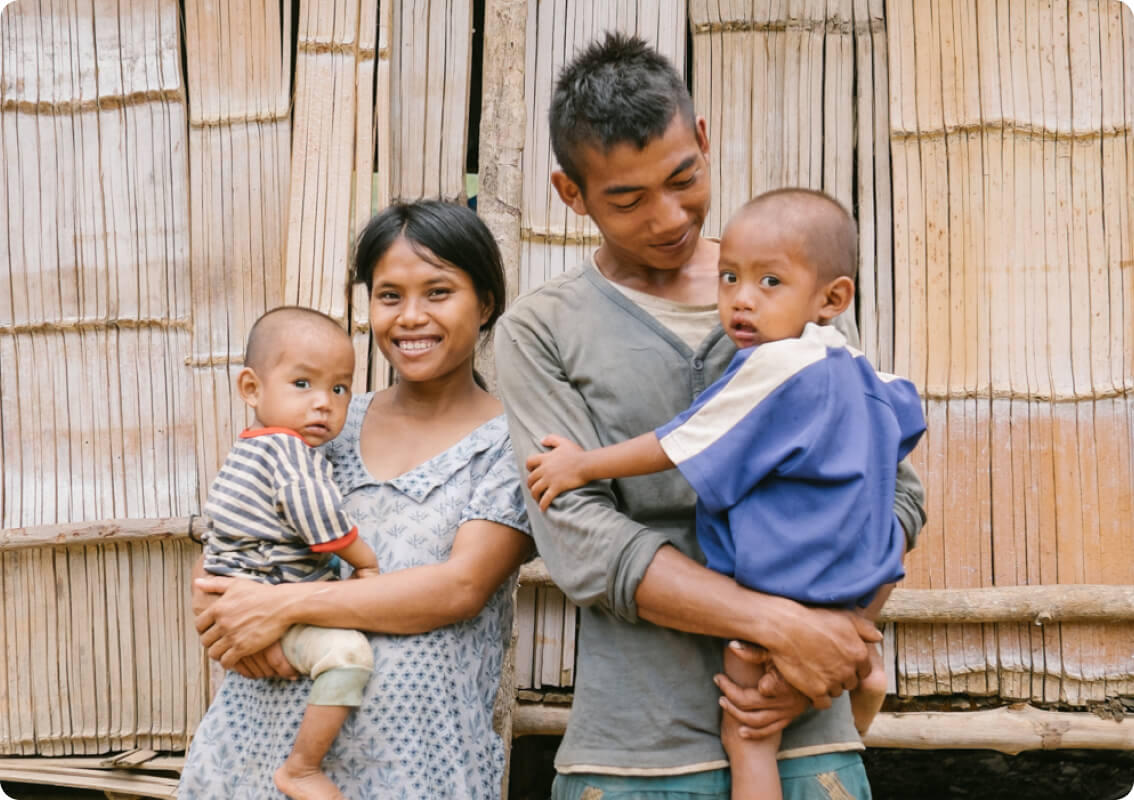
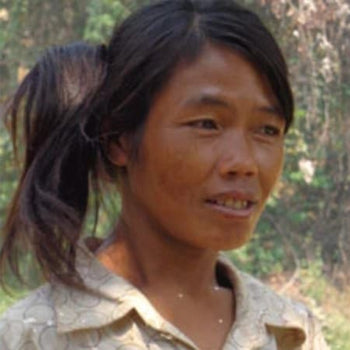
A social enterprise, not a charity. In Southeast Asia, hill tribes such as the Mlabri are among the most disadvantaged and vulnerable groups of society. Hammocks have been the means to securing civil rights, combating deforestation, creating basic infrastructure and achieving financial security for hill tribe villages in this region of Northern Thailand.

As a hunter-gatherer society with no concept of land ownership or relationship with the outside world, the Mlabri way of life was devastated when the land around them was claimed and deforested. Impoverished, without citizenship, and enslaved by opportunists, their future appeared bleak.

Yellow Leaf aims to engineer a turnaround in which marginalized ethnic groups such as the Mlabri apply their artisan talents towards creating a micro-economy that will elevate them from their former state and maintain their cultural identity, with the added benefit of eradicating toxic farming methods within the communities we partner with.

In the spring of 2010, Joe Demin traveled to Thailand to visit an old friend. Like many of us, he had grown increasingly disenchanted with his corporate job, disconnected from the results of his labors and slightly hunchbacked from days and nights in front of a laptop screen.
He was hoping to soak up the sun, explore Thai culture and eat some seriously spicy noodles. He didn’t have an inkling that his three week trip would set off a chain of events that led to him leaving his corporate job and investing everything he had into a new endeavor: to spark a hammocking revolution.
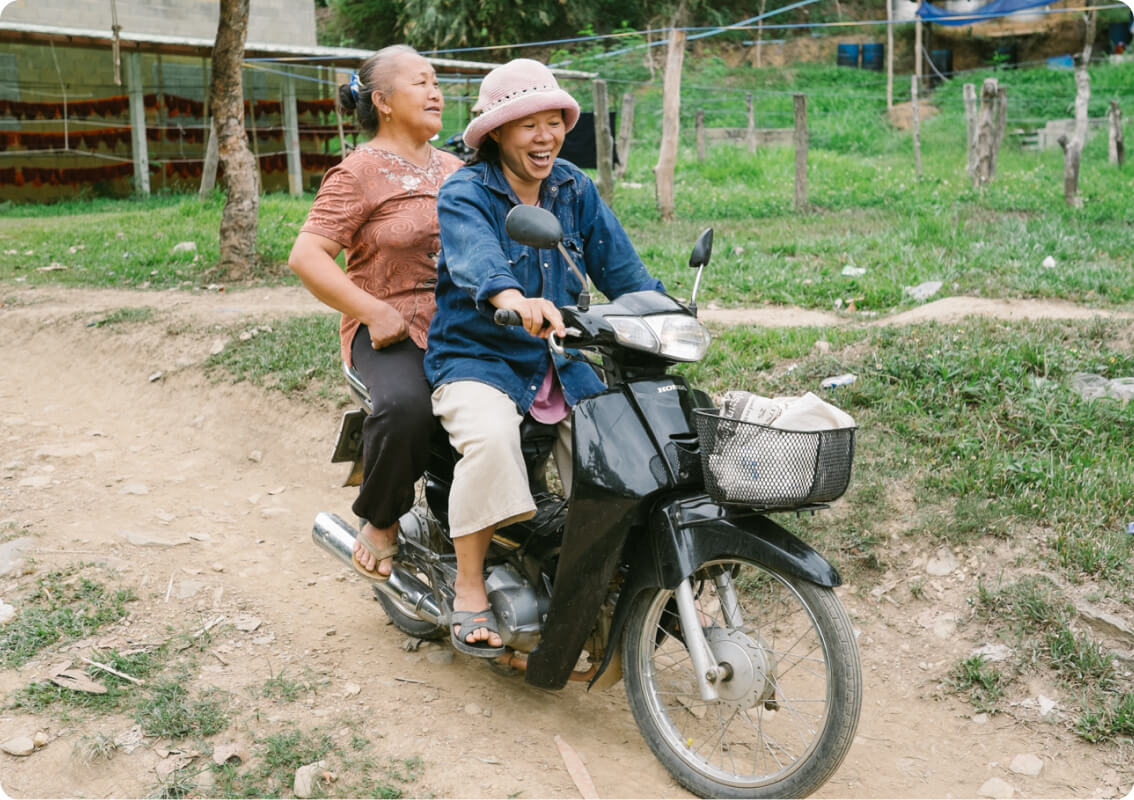
After a whirlwind tour from North to South, Joe found himself on the beautiful beaches of Ko Lanta. Ever the energetic traveler, he left his friends sleeping on the beach and took off through the jungle on a rickety motorbike. Zipping past elephants and down winding roads, he stopped short at the sight of a stilted shop with two hammocks strung up outside. As a life-long hammock connoisseur, Joe was drawn to the bright colors of these intricately woven slings and immediately jumped into a hammock. It was love at first swing.
The hammock wrapped around him, cocooning him in its cloudlike embrace. He was mesmerized by the intensely bright color combinations and the intricate weaving. At 6’2″, he was amazed to feel like he could really sprawl out in a hammock the size of his queen bed. Having immediately decided to bring one of these miraculous hammocks home to snowy Boston, Joe started asking the shopkeeper questions. Where were the hammocks made? Who wove them? Who designed these cozy creations?
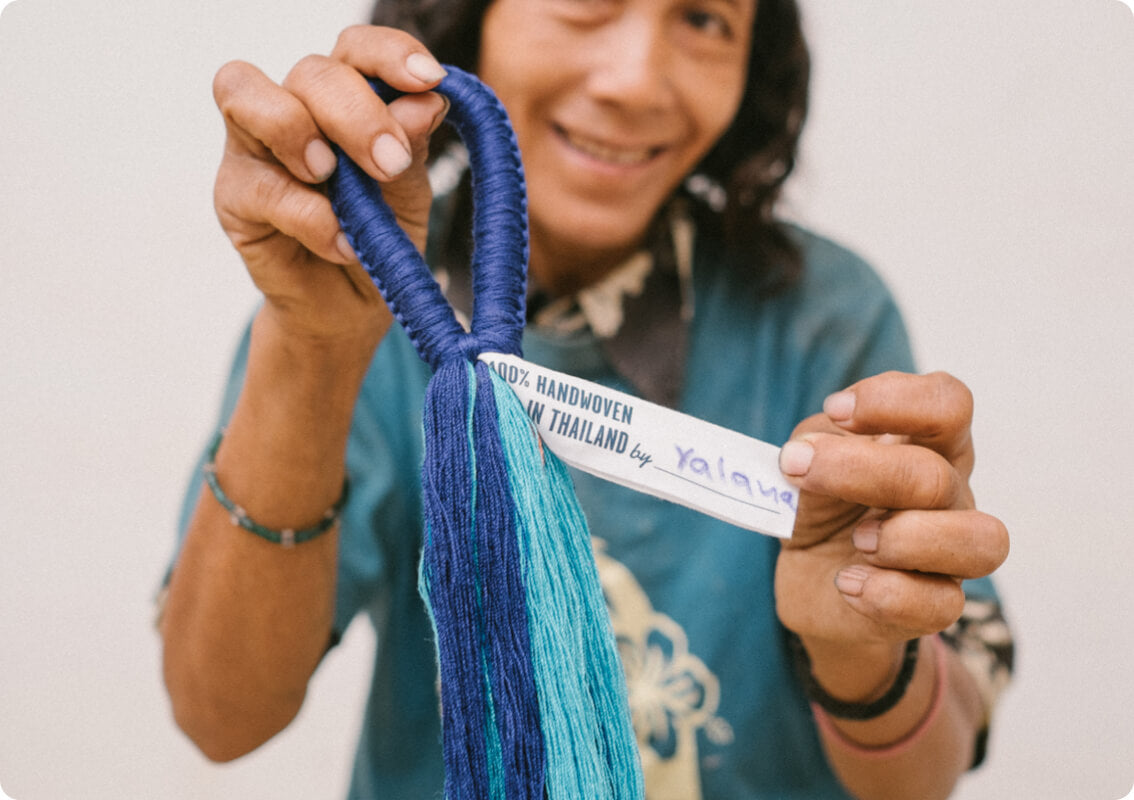
Hearing the powerful story of the Mlabri—their marginalization and disenfranchisement as Thailand’s jungles disappeared, their powerful desire to preserve their unique culture and family ties, their path from exploitation and slavery to relative prosperity—Joe felt a tug that he couldn’t quite understand. He wanted to know more.
Joe changed his travel plans, left the tropical island behind and trekked North. He cajoled a cabby into driving him 600 miles so he could spend a single day in the remote Mlabri Village. Meeting the Mlabri weavers, Joe was struck by the progress they had made in transforming their condition and their bright plans for the future. Seeing firsthand how the tribe had been able to blend their traditional lifestyle into their new economic venture, Joe was impressed. He was especially blown away by the fact that the Mlabri were even offering employment and training to the same tribes who had once enslaved them.
Although weaving was bringing new opportunity to the tribe, the valley had not left the past behind. His time in the village made it clear that there was a growing desire for alternatives in the region, and that the work force would gladly meet an increased demand if a global sales channel opened up. During Joe’s visit, forest fires burned on the horizon as slash & burn farming continued. People hoping for weaving work often hiked miles and miles from neighboring villages, only to be turned down because there were not enough hammock orders in the off-season. During that slow season, many of the Mlabri weavers still had to resort to toxic farming or travel to other villages seeking employment.
Face to face with the potential to transform an entire region, Joe knew there was no turning back.
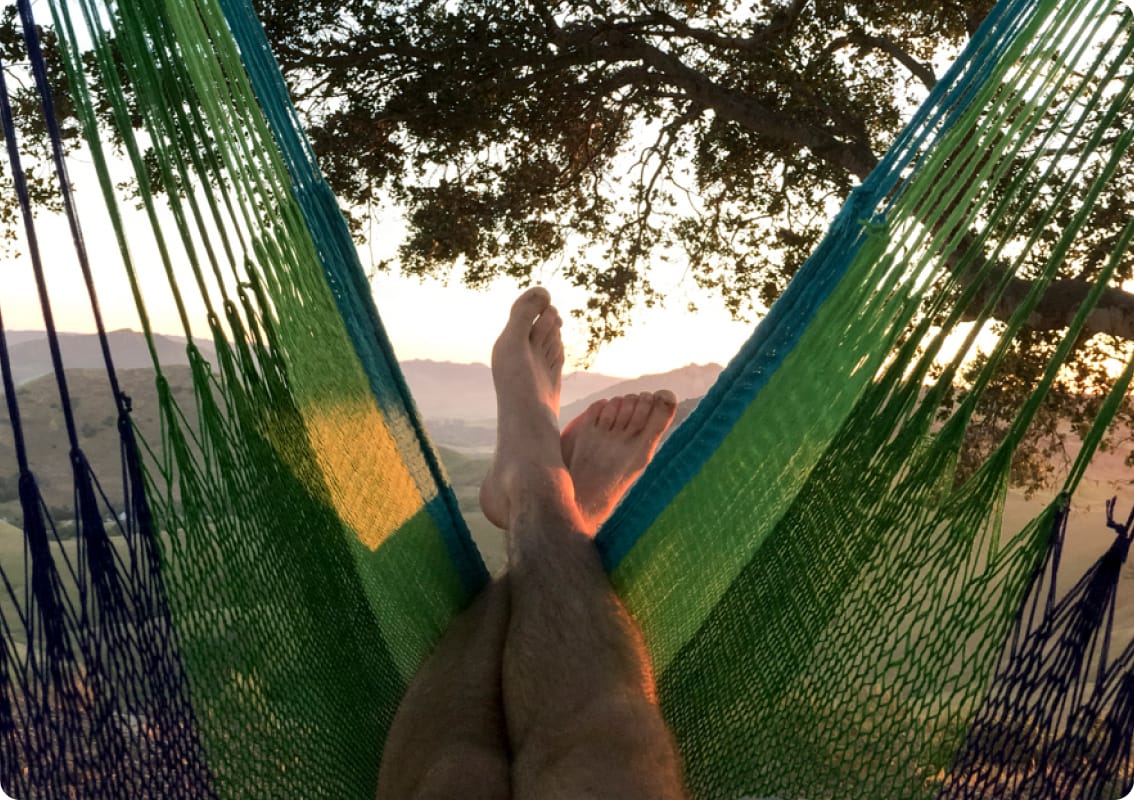
He returned to America with his backpack stuffed full of hammocks and the first rendition of his business plan scribbled on the back of a plane’s airsickness bag. A few months later, he left that corporate job, replacing his swivel chair with a hammock. He’s working round the clock to build long-term social change, unite commerce with sustainability and to spread Yellow Leaf’s philosophy- Do Good. Relax!
Read more about how “Do Good. Relax.” was born on our Front Porch Blog.

Yellow Leaf Hammocks has deep roots in the tumultuous, heart-wrenching history of the Mlabri people. From peaceful forest dwellers to 20th century slavery, they’ve battled exploitation, death threats, malnourishment, malaria and displacement. Faced with this barrage of plagues, their numbers dwindled until UNESCO placed them on the “Endangered Languages List”, with only 300 Mlabri left in the world. In spite of the extreme hardships they’ve faced, they’ve maintained a fierce determination to preserve their culture.
Very little is known about the tribe’s existence before the 1930s. The Mlabri were traditionally a hunter and gatherer society, with spiritual beliefs that compelled them to move every few days. They built huts with thatched roofs of banana leaves and abandoned them when the leaves turned yellow. A gentle and reclusive people, they were rarely seen by outsiders and their presence was only known by these abandoned huts- thus they were called “The People of the Yellow Leaves.”
They lived off of the land, with occasional interruptions from anthropologists, thriving well into the 20th century. By the 1970s, rapid economic development in Thailand stripped their forests of their natural bounty and eventually stripped away the forests themselves- lost to slash & burn farming and an insatiable demand for teak. Bereft of their homes and livelihood, denied civil rights, and with no conception of “land ownership,” the Mlabri were especially vulnerable to exploitation.
Malnourishment and malaria contributed to the rapid dwindling of the tribe’s population. Those who had survived were forced into servitude for neighboring tribes, working in toxic farming and made to perform in faux-primitive tableaus for tourists.
When the future appeared most bleak, a long-shot effort helped turn it all around.
In the late 1970s, an aid worker and his family moved to the region and began to dedicate their lives to improving conditions for the Mlabri people. Local powers who were profiting from the Mlabri’s forced labor threatened the lives of the family and the tribe, but through stalwart efforts over the course of a decade, a humble village was built as a haven for the Mlabri people and they began to focus on finding a new way to earn income while preserving their cultural values.
This determination to safeguard their heritage presented obstacles to financial freedom. Theirs is a culture that values family time above material possessions and has a number system reaching only to 9 (everything else is “a lot”). The land around them had been gobbled up and there were no fertile fields for agriculture. Attempts to sell traditional woven goods met with limited success and didn’t bring in enough income to support the village.
Through a lucky inspiration, the unlikely proposition of turning their weaving skills to hammocks won the day. The villagers worked with a Swiss textile engineer to adjust tension and develop new weaves, eventually reaching the cocoon-like level of comfort that is Yellow Leaf’s trademark. A Belgian hammock devotee discovered their products and helped establish several shops in touristed areas along Thailand’s coasts.
The security of a stable, growing revenue source had a tremendous impact on the village. The Mlabri were able to start a school and build a community center for weaving and socializing. They established one of Thailand’s first unemployment funds. With increased economic power, they successfully lobbied for citizenship and civil rights, which they were first granted in 2001.
Although their condition has improved by leaps and bounds, the hard work is far from done. Until a consistent volume of global sales is reached, demand for new weavers is dependent upon the Thai tourism season. With a consistent sales channel, we will not only be able to employ all the Mlabri year-round, we will also be able to continue to expand and provide training and ongoing employment to hill tribe communities in the surrounding region. Until full-time weaving work is available to everyone, destructive agricultural practices will continue and the exploitative cycle of indentured servitude will not end.
Through the establishment of Yellow Leaf as a global lifestyle brand, the hill tribe villages we partner with will be able to sustain this positive impact and continue to lay the foundation for a brighter future.